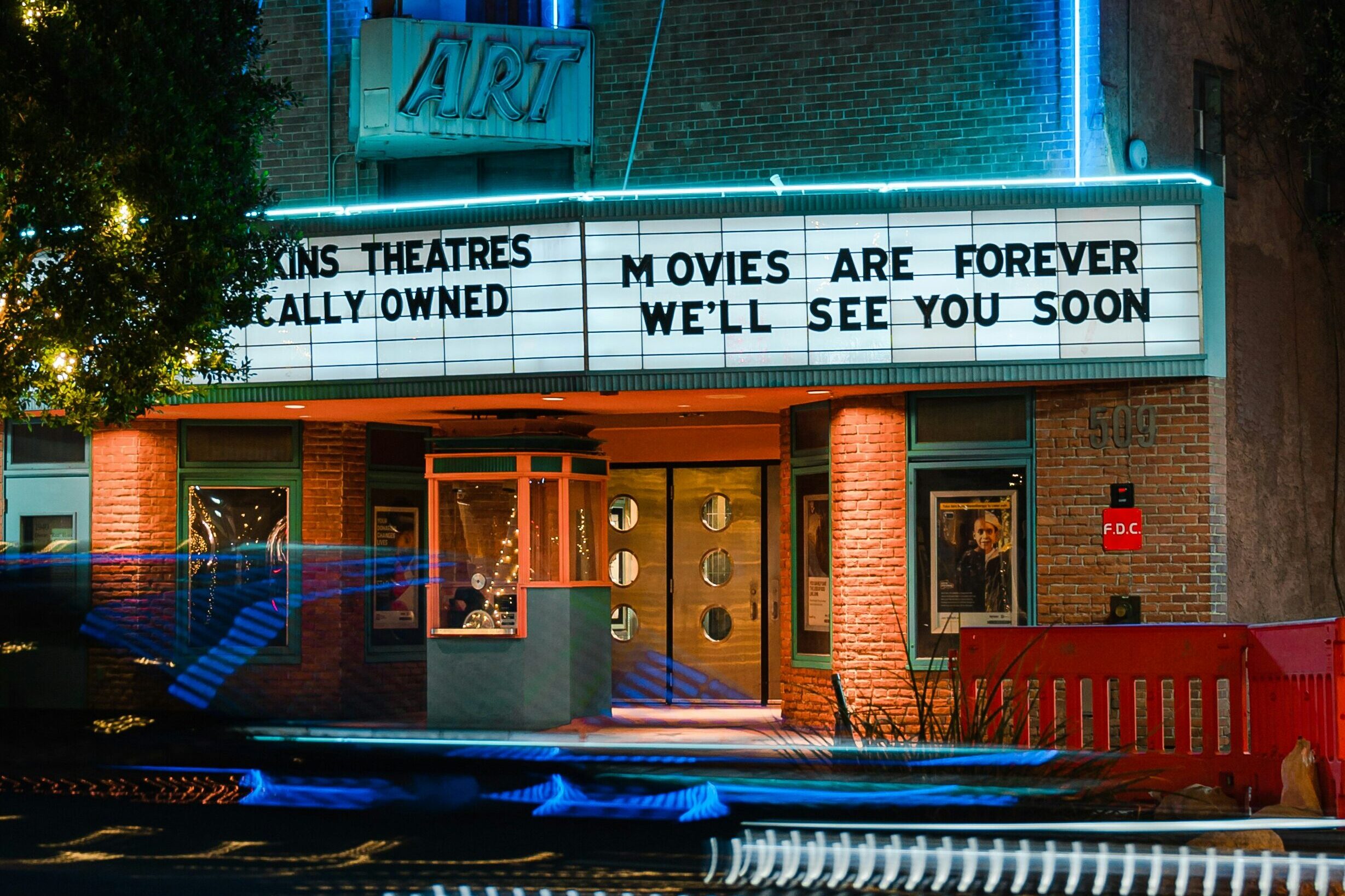
A Brief History of Film in the US
Born out of photography and the need to win a bet, filmmaking in the U.S. had humble beginnings that taught its viewers how to appreciate it. Edison built the first film studio, and the Lumière brothers the first theater; thus, the inception of the American film business. Showings started with clips of everyday things, then became one-shot stories, and eventually sequential shots, with the first narrative movie being A Trip to the Moon in 1902. This marks a defining factor of the film industry: when novelty wears off, innovation is required.
As the industry boomed, movies became the face of art, glamour, and leisure, in a very accessible way. Movies made people talk, scandals ensued, genres were added, and politics addressed. By 1930, there were 90 million weekly moviegoers (Baran, 2025, pp. 121–131). Today, only around 13% of the U.S. population attends showings weekly (Statista Research Department, 2025). Why has film stopped being exciting? Has the industry lost the ability to creatively produce anomalies?
What Happened to Creativity?
Creativity drove the film industry and shaped its value when developing new content for viewers to consume. This attribute in film can be hard to define. Rather, it can be understood by a film’s success. Every year, massive amounts of money are spent on promoting films that are predicted to succeed at the Academy Awards and then stamped with an Oscar (Shahghasemi, 2021). This success leads to a perceived reception in the public eye and creates the most valuable commodity, a good reputation.
The fear of creating something new has led to an erosion of its public image with many big studio audiences. As a result, a series of live-action remakes have been produced, resulting in a few small successes but also severe disappointment from audiences. Why do companies continue to make these movies? Why not make something new? The answer is complicatedly simple: moviemaking is an expensive and long process put into the hands of many people. A writer’s original idea is converted into a spec script, screenplay, and shooting script, giving the director little time to examine creativity, only to produce a plan of action. Profit trumps creativity, and the only power to change it lies with writers (Shahghasemi, 2021).